
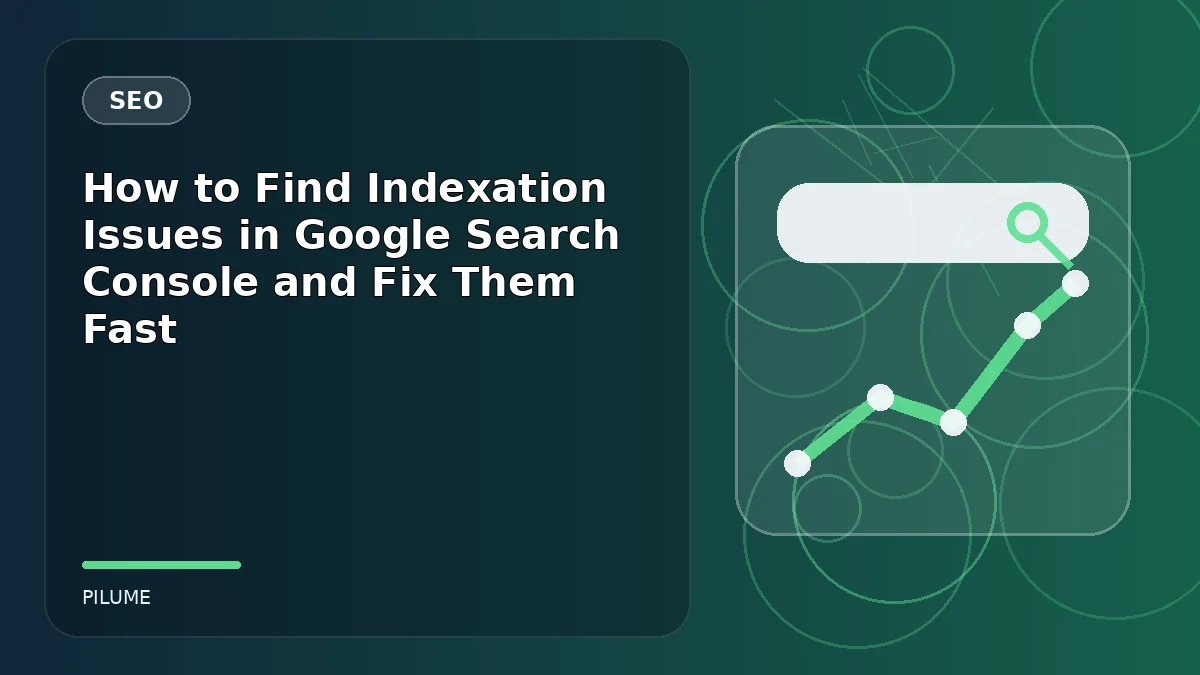
When important pages on your website disappear from search results or fail to appear entirely, organic traffic can stall. Finding these problems early requires looking directly at how search engines interact with your content. Fortunately, you can learn how to find indexation issues in Google Search Console by navigating the built-in diagnostic tools that Google provides for site owners.
Understanding why certain URLs remain unindexed helps you separate intentional design choices—like internal utility pages or duplicate content—from accidental technical barriers. This guide walks through checking your status, interpreting common warnings, and taking corrective steps to restore crawl health.
Before diving into complex diagnostics, remember that small sites with fewer than 500 pages often do not need deep log analysis; simple spot checks using specific search operators or the URL inspection tool can confirm basic visibility, as noted in the Google Search Console Page Indexing Report Guide.
Phase 1: Accessing the Google Search Console Page Indexing Report
The primary dashboard for tracking your site’s presence is the Page Indexing report (previously known as the index coverage report). Here is how to locate it and review your overall site status:
- Log in to your Google Search Console dashboard and select your property from the left-hand menu.
- Scroll down the sidebar and click on Pages under the Indexing section to open the main chart view.
- Review the top summary cards showing how many pages are marked as Indexed versus Not indexed.
- Scroll past the chart to inspect the specific reason codes listed in the table below, which explain why individual URLs were skipped.
Phase 2: Reviewing Common Excluded Page Reasons
Not every unindexed page requires a fix. Google intentionally skips low-value templates, parameters, and redirects. However, you must carefully inspect the list to ensure critical content is not trapped behind an unexpected roadblock.
Common status types include pages excluded by a “noindex” tag, URLs blocked by a robots.txt file, or entries marked as “Discovered – currently not indexed,” which usually means Google found the link but chose not to crawl it yet due to crawl budget limits or low priority. For a broader look at cleaning up your site architecture, you can also review our guide on how to audit XML sitemaps to fix hidden indexing errors.
Phase 3: Inspecting and Testing Individual URLs
If you suspect a specific article or product page should be live in search results but remains missing, use the diagnostic search bar at the very top of your Search Console window.
Type or paste the exact URL into the Inspect any URL in ‘yourdomain.com’ search box and press Enter. Google will pull live data directly from its index. If the tool reports that the URL is not on Google, click the Test Live URL button to see an HTML code preview, a screenshot of what Googlebot sees, and a breakdown of whether headers or scripts block access. If you have recently resolved internal linking gaps, you might also want to check our guide on how to find and fix orphaned content to recover lost organic traffic.
Phase 4: Fixing Technical Blocks and Requesting Re-indexing
Once you identify the root cause of an indexing failure, apply the appropriate technical correction:
- Robots.txt Blocks: If a valid page is blocked by your robots file, update your file rules to allow access for Googlebot.
- Accidental Noindex Tags: Check your content management system settings or plugin configurations to remove erroneous meta robots tags.
- Request Re-crawl: After fixing the underlying issue, return to the URL Inspection tool for that specific page and click Request Indexing to prompt a fresh crawl.
Keep in mind that crawling and processing changes can take anywhere from a few days to a couple of weeks depending on site size and authority. Routine audits help ensure your core content remains visible to searchers over time.
Frequently Asked Questions
Where Is the Index Coverage Report Located in Google Search Console?
The report is now named the Page Indexing report. You can find it by logging into Google Search Console, selecting your property, and clicking on ‘Pages’ under the Indexing menu in the left sidebar.
Why Does Google Search Console Show ‘Discovered – Currently Not Indexed’?
This status means Google found a link to the URL on your site, but decided not to crawl it yet. This often happens due to low content priority, site structure issues, or overall crawl budget limits on larger websites.
Should Every Single Page on My Website Be Indexed by Google?
No. It is normal and expected for certain URLs—such as utility pages, internal search parameters, admin login pages, or intentional duplicates—to remain unindexed. Focus on ensuring your primary content pages are green and valid.
How Do I Force Google to Re-crawl a Fixed Page in Search Console?
Paste the specific URL into the top search bar of Google Search Console to use the URL Inspection tool, click ‘Test Live URL’, and then select ‘Request Indexing’ to alert Google that you have updated the page.